
What Businesses Should Know Before Installing an LED Video Wall
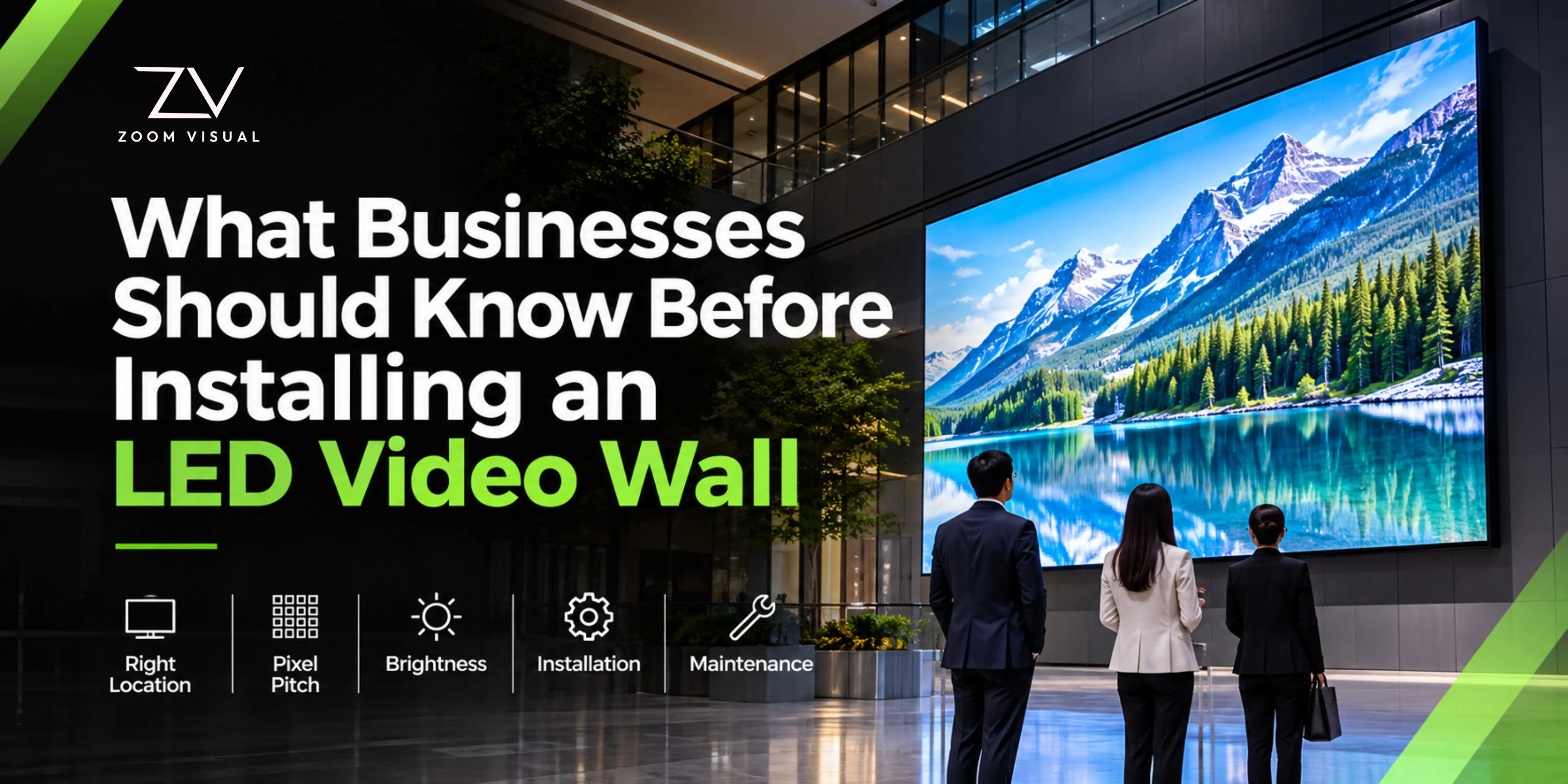
An LED video wall can completely change the way a business presents itself. From impressive displays in corporate reception areas to eye-catching retail advertising and immersive event backdrops, large-format LED screens have become an increasingly popular choice for businesses looking to create a stronger visual presence.
However, installing an LED video wall involves more than choosing a screen size and deciding what content to display. Factors such as viewing distance, pixel pitch, screen brightness, installation space, structural requirements and ongoing maintenance all play an important role in determining how well the display performs.
Whether you are planning to upgrade your retail store, renovate an office, enhance a showroom or install a display for an upcoming commercial project, understanding these considerations can help you make a more informed investment.
Here are 8 important things every business should consider before installing an LED video wall.
1. Determine Where Your LED Video Wall Will Be Installed
The first step is to understand the environment in which your LED video wall will operate. Not every LED display is designed for the same conditions, and choosing the wrong type can affect both its performance and lifespan.
Generally, LED video walls are divided into two main categories.
Indoor LED Video Walls
Indoor LED displays are designed for controlled environments where viewers are relatively close to the screen. They are commonly used in:
- Corporate offices and reception areas
- Shopping malls and retail stores
- Hotels and hospitality venues
- Conference rooms and meeting spaces
- Exhibition halls and showrooms
- Restaurants and entertainment venues
These displays typically prioritise image clarity, colour accuracy and fine pixel pitch to deliver sharp visuals at shorter viewing distances.
Outdoor LED Video Walls
Outdoor LED displays are built to operate in more demanding environments. They are designed to handle exposure to sunlight, rain, humidity and changing weather conditions.
Common applications include:
- Building facades and outdoor advertising
- Shopping mall exteriors
- Outdoor event stages
- Sports facilities and stadiums
- Commercial signboards
- Public spaces and transport areas
For businesses in Singapore, weather resistance is particularly important due to frequent rainfall, high humidity and strong sunlight.
An outdoor installation should be assessed for appropriate waterproofing, brightness, ventilation and protection against environmental conditions.
Choosing between indoor and outdoor LED displays should always begin with a proper assessment of the installation location.
2. Choose the Right Pixel Pitch for Your Viewing Distance
Pixel pitch is one of the most important specifications to consider when purchasing an LED video wall.
It refers to the distance between the centres of two neighbouring LED pixels, measured in millimetres. The smaller the pixel pitch, the closer the pixels are positioned together, resulting in a higher pixel density and sharper image.
However, a smaller pixel pitch is not automatically better for every installation. The ideal specification depends on how far away your audience will be standing.
Here is a general guide:
| Pixel Pitch | Typical Applications |
|---|---|
| P0.9 to P1.5 | Executive boardrooms, premium showrooms and close-viewing environments |
| P1.5 to P2.5 | Retail stores, corporate offices and indoor commercial displays |
| P2.5 to P3.9 | Larger indoor spaces, exhibition halls and selected outdoor applications |
| P4 to P6 | Outdoor advertising and larger viewing environments |
| P6 and above | Large outdoor displays viewed from greater distances |
These are general application examples rather than fixed rules. The actual selection should account for screen dimensions, viewing distance, content resolution and the environment.
For instance, a corporate meeting room where employees sit relatively close to the screen may benefit from a fine-pitch LED display. On the other hand, a large outdoor advertising screen viewed from across a road may not require the same pixel density.
Selecting the appropriate pixel pitch helps businesses achieve the image quality they need without spending unnecessarily on specifications that may not provide a noticeable improvement.
3. Consider Screen Brightness and Ambient Lighting
Have you ever looked at a digital display through a glass window and noticed that the content appears washed out by sunlight?
This is a common consideration when installing LED screens in commercial environments.
Brightness determines how clearly the content can be seen under different lighting conditions. It is measured in nits, also known as candela per square metre (cd/m²).
For indoor environments, brightness requirements vary depending on the amount of ambient light in the space.
For example:
- Standard office environments generally require moderate brightness for comfortable viewing.
- Retail stores with strong ceiling lights may need higher brightness.
- Displays facing glass facades may require additional brightness to remain visible during daylight.
- Outdoor installations need significantly higher brightness to maintain visibility under direct sunlight.
Businesses should also consider automatic brightness adjustment for suitable installations. This allows the display to adjust its output according to surrounding light conditions, helping to maintain visibility while avoiding unnecessarily high brightness during darker periods.
The objective is not simply to purchase the brightest screen available. It is to select a display that remains clear and comfortable to view in its intended environment.
4. Check the Available Installation Space and Structural Requirements
An LED video wall can be customised to fit different dimensions and layouts, but the installation space needs to be assessed before any equipment is purchased.
One of the most common mistakes businesses make is focusing entirely on the screen dimensions without considering the structure and surrounding environment.
Before installation, several factors should be reviewed:
Wall strength and mounting structure
The supporting wall or mounting framework must be capable of handling the combined weight of the LED cabinets and supporting components.
Depending on the installation, a dedicated steel structure or aluminium mounting framework may be required.
Available installation depth
Consider how much space is available behind the display. Some installations require additional clearance for cabling, ventilation and maintenance access.
Power supply
LED video walls require an appropriate electrical supply based on the display’s size and specifications. Electrical loading, circuit capacity and power distribution should be assessed before installation.
Ventilation and heat management
Like other electronic equipment, LED displays generate heat during operation. Proper ventilation is important to maintain stable performance, particularly for larger installations or displays that operate for extended hours.
Maintenance accessibility
Think about how technicians will access the screen if a module or component needs to be replaced.
For example, a wall-mounted display in a corporate reception area may require front maintenance access if there is limited space behind the screen.
Planning these details early can help prevent unnecessary installation modifications, delays and additional costs.
5. Select the Right LED Technology for Your Business
Not all LED displays use the same technology. Different LED packaging methods offer different advantages depending on the intended application.
Three commonly used technologies are SMD, GOB and COB.
SMD (Surface-Mounted Device)
SMD is a widely used LED packaging technology suitable for various indoor and outdoor display applications.
It offers a practical balance between image quality, brightness and cost, making it a popular choice for general commercial displays.
GOB (Glue-on-Board)
GOB technology involves applying a protective transparent layer over the LED surface.
This additional layer helps improve resistance to dust, moisture and physical impact, depending on the product’s specifications.
It can be particularly useful for high-traffic environments where displays may be exposed to accidental contact, such as retail spaces, entertainment venues and event installations.
COB (Chip-on-Board)
COB technology involves mounting LED chips directly onto a circuit board and encapsulating them with a protective layer.
It is commonly used in fine-pitch LED displays where high pixel density, close viewing distances and detailed image reproduction are important.
For example, a premium corporate boardroom may benefit from a fine-pitch COB display, while a retail advertising screen may be better suited to an SMD or GOB solution depending on its environment.
There is no single technology that is ideal for every business. The right choice depends on your installation requirements, viewing conditions and budget.
6. Plan Your Content and Display Resolution
A high-quality LED video wall is only as effective as the content displayed on it.
Before installation, businesses should consider what the screen will be used for and whether their existing content is suitable for the intended display dimensions and resolution.
For example, a retail store may use its LED video wall to showcase product advertisements, promotional videos and seasonal campaigns. A corporate office may use the same technology for company presentations, welcome messages and internal communications.
Some important content considerations include:
Content resolution
Your visual content should be prepared according to the actual pixel resolution of the LED video wall. Using content with unsuitable dimensions may result in stretched images, cropping or reduced visual clarity.
Aspect ratio
Consider whether the display will use a standard landscape format, portrait orientation or a customised configuration.
Content management
Businesses that regularly update promotions or announcements should consider how content will be uploaded and managed.
A suitable content management system can make it easier to schedule advertisements, update visuals and manage multiple displays.
Refresh rate and camera compatibility
If your LED video wall will be used for corporate presentations, live events or video recording, refresh rate and camera compatibility should also be considered.
A display that looks perfectly fine to the naked eye may show flickering or unwanted scanning lines when recorded by a camera.
Planning content requirements before installation helps ensure that the finished display delivers the intended visual experience.
7. Understand the Installation, Maintenance and Long-Term Costs
When budgeting for an LED video wall, the purchase price should not be the only consideration.
The overall investment may include several components beyond the display itself.
These can include:
- LED cabinets and display modules
- Mounting structures and installation materials
- Electrical wiring and power distribution
- LED processors and control systems
- Content management software
- Transportation and installation labour
- Maintenance and replacement components
It is also important to understand the maintenance requirements of your chosen display.
LED video walls are modular systems, meaning individual modules or components can generally be serviced or replaced without replacing the entire display.
However, accessibility and the availability of replacement components should be discussed before purchasing.
Businesses should also clarify the warranty coverage, after-sales support and availability of technical assistance.
For installations in commercial environments where the screen operates for extended hours, having a clear maintenance plan can help reduce unexpected downtime.
Rather than choosing a display based solely on the lowest initial quotation, consider the overall value, reliability and support available throughout its operating life.
8. Work With an Experienced LED Display Supplier and Installer
Even a high-quality LED display can underperform if it is not properly planned or installed.
Working with an experienced LED display supplier can make a significant difference, especially for large or customised projects.
A reliable supplier should be able to assist with more than simply supplying the display panels.
Look for a provider who can help with:
- Site assessment and installation planning
- Pixel pitch and display specification recommendations
- Screen dimensions and configuration
- Structural and mounting considerations
- Electrical and technical requirements
- Display configuration and testing
- Maintenance and after-sales support
It is also worth reviewing the supplier’s previous projects to understand their experience with different commercial environments.
Ask questions about installation timelines, warranty coverage, technical support and how potential display issues will be handled.
A properly planned installation helps ensure that your LED video wall meets your business requirements and performs as expected over time.
Where Can Businesses Use LED Video Walls?
One of the biggest advantages of LED video walls is their versatility. They can be customised to suit different environments, screen sizes and business applications.
Here are some common examples.
Retail Stores and Shopping Malls
Retail businesses can use LED video walls to showcase promotions, product advertisements, brand campaigns and seasonal collections.
Large displays can also become architectural features that help create a more memorable shopping environment.
Corporate Offices and Reception Areas
An LED video wall in a corporate reception area can display company branding, welcome messages, corporate videos and important announcements.
It provides businesses with an opportunity to create a more modern and professional first impression.
Hotels and Hospitality Venues
Hotels can use LED displays in reception areas, ballrooms, restaurants and event spaces to communicate information, showcase promotions and enhance the guest experience.
Exhibition Halls and Events
For exhibitions, conferences and product launches, LED video walls provide flexible backdrops for presentations, promotional videos and live visual content.
Their modular design allows businesses and event organisers to create displays that suit different stage layouts and venue requirements.
Entertainment and F&B Venues
Restaurants, bars and entertainment venues can use LED displays to create immersive environments, promote their offerings and communicate with customers through dynamic visuals.
Final Thoughts: Plan Your LED Video Wall Before Making an Investment
Installing an LED video wall is an opportunity for businesses to improve their visual communication, strengthen brand identity and create more engaging commercial spaces.
However, getting the right result requires more than selecting an attractive display.
From pixel pitch and brightness to installation structures, content management and long-term maintenance, every detail should be considered before moving forward with a project.
Taking the time to assess your space, understand your requirements and work with the right display specialist can help you avoid unnecessary expenses and achieve a solution that suits your business.
Looking for an LED Video Wall in Singapore?
At Zoom Visual, we provide a range of LED video wall solutions for businesses across Singapore. Whether you are looking for an indoor LED screen for a retail store, an outdoor LED display for advertising or a fine-pitch display for a corporate environment, our team can help you explore a suitable solution.
Our LED video wall range includes indoor LED screens, outdoor LED screens and Micro LED walls, with different configurations available to suit various applications.
Not sure which pixel pitch, screen size or display technology is right for your project?
Contact Zoom Visual today to discuss your requirements and explore an LED video wall solution for your business.
Website: https://zoomvisual.com.sg/
LED Video Wall Solutions: https://zoomvisual.com.sg/product-category/led-video-wall/
LED Display Solutions: https://zoomvisual.com.sg/product-category/led-display-screen/
Contact Us: https://zoomvisual.com.sg/contact-us/
Tags:
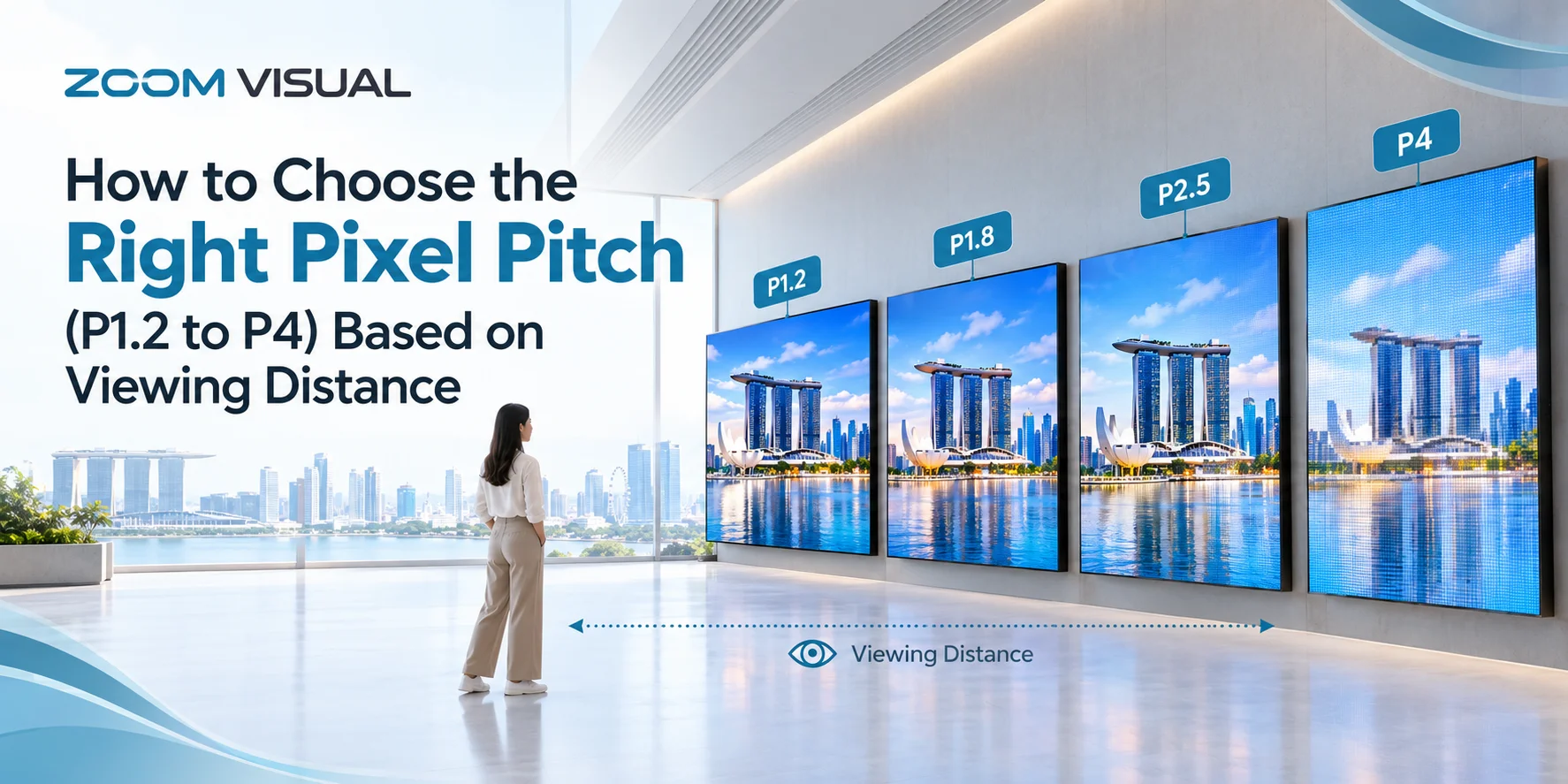
Choosing the right pixel pitch for a commercial LED display is one of the most critical decisions in any AV installation. Whether you are outfitting a high-tech corporate boardroom in Raffles Place or launching a outdoor retail facade on Orchard Road, getting the pixel pitch right ensures crisp image clarity while optimizing your total capital […]
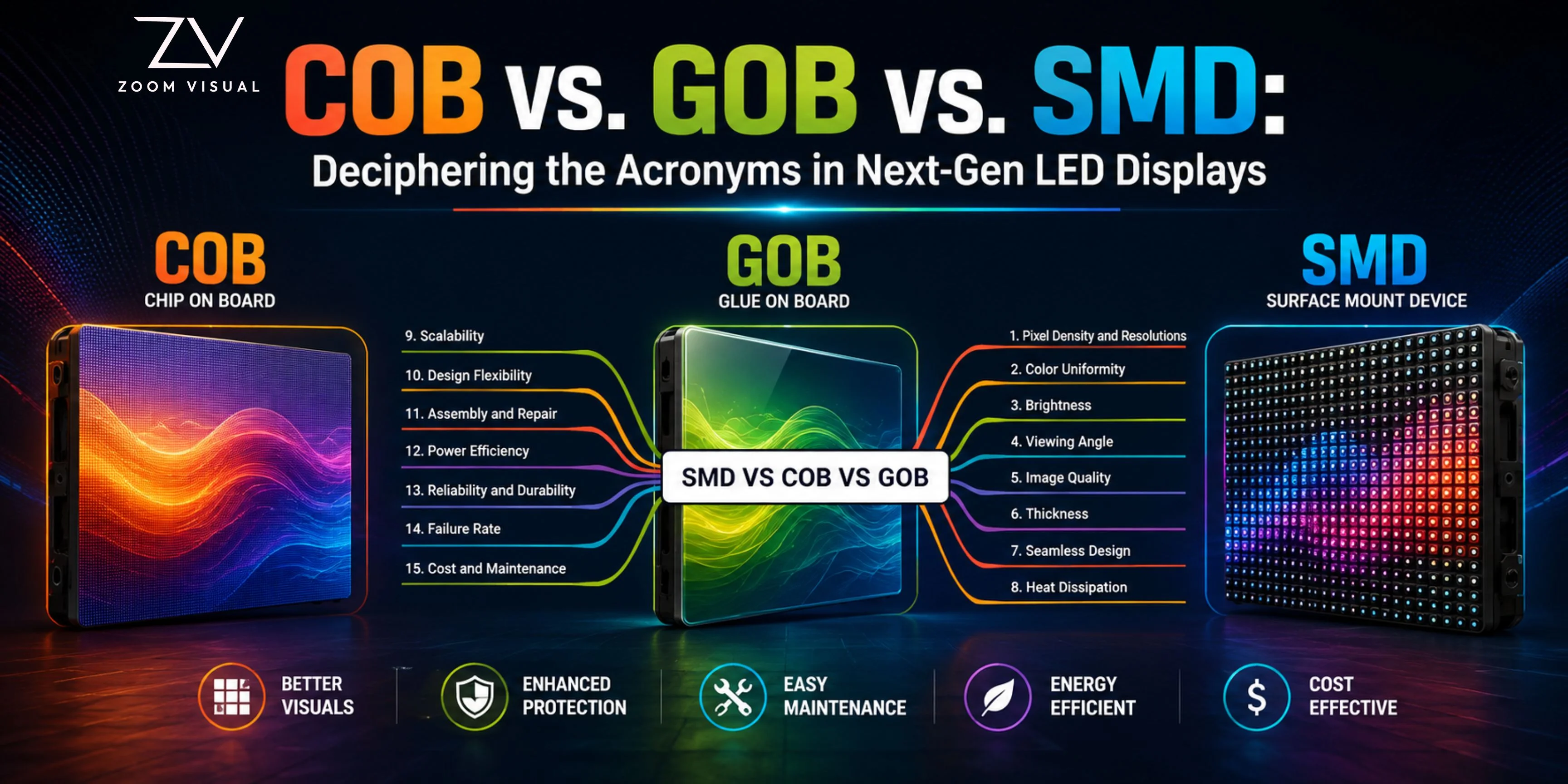
When investing in a commercial LED display in Singapore, whether for a retail outlet on Orchard Road, an executive boardroom in Raffles Place, or a nightlife stage in Clarke Quay, you will quickly run into industry jargon like SMD, GOB, and COB. While all three technologies deliver vibrant visuals, they differ significantly in durability, pixel […]
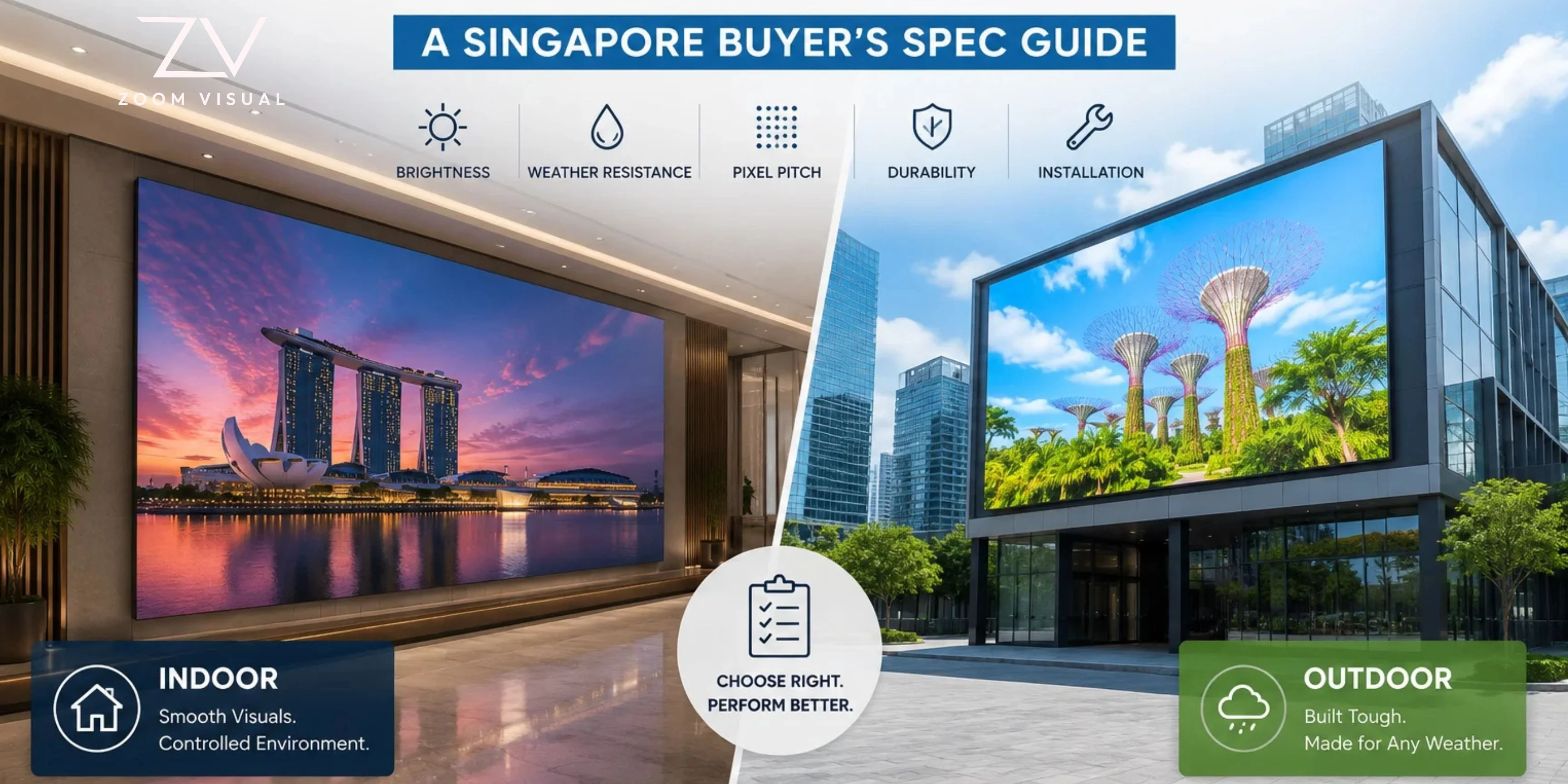
Whether you are designing an executive boardroom in Raffles Place, creating an immersive retail feature wall in Orchard Road, or planning a building-facade billboard in Jurong, choosing between an indoor and an outdoor LED video wall comes down to specific engineering requirements. While both technologies use modular LED cabinets to build seamless, large-format screens, their […]
Error: Contact form not found.
Get a quote Now!
Whether you have a question about our services, pricing, or anything else, our team is ready to answer all your questions!